哈希表(散列)
思路分析
基本介绍:
散列表(也叫哈希表),是根据关键码值而直接进行访问的数据结构。
它通过把关键码值映射到表中一个位置来访问记录,以加快查找速度。这个映射函数叫做散列函数,存放记录的数组叫做散列表。
哈希表的价值:
对于经常要使用的数据,放在缓存层使用,减少了数据库的压力。哈希表相当于起到了一个缓存层的作用。
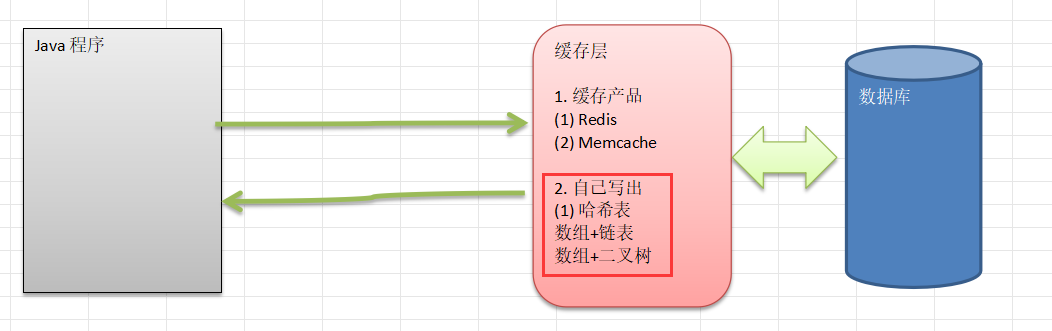
图解:
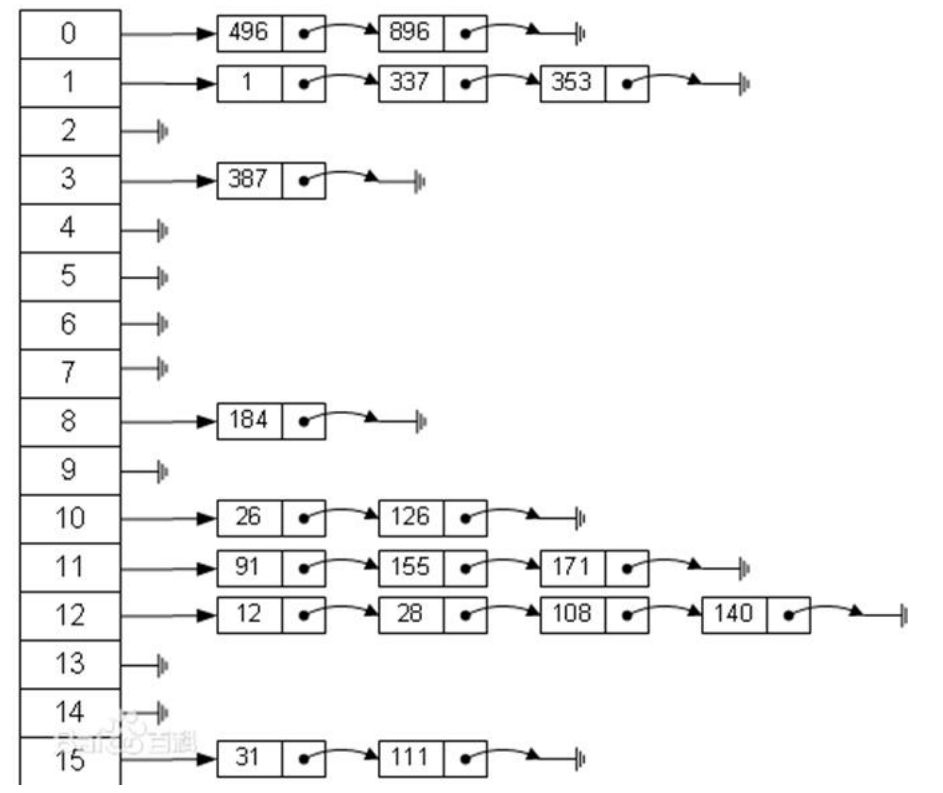
此处用一个实际题目来使用哈希表:
(google公司上机题:)有一个公司,当有新员工来报到时,要求将该员工的信息加入(id,性别,年龄,住址……),当输入该员工的id时,要求查找到该员工的所有信息。要求不适用数据库,尽量节省内存,速度越快越好=》哈希表(散列)
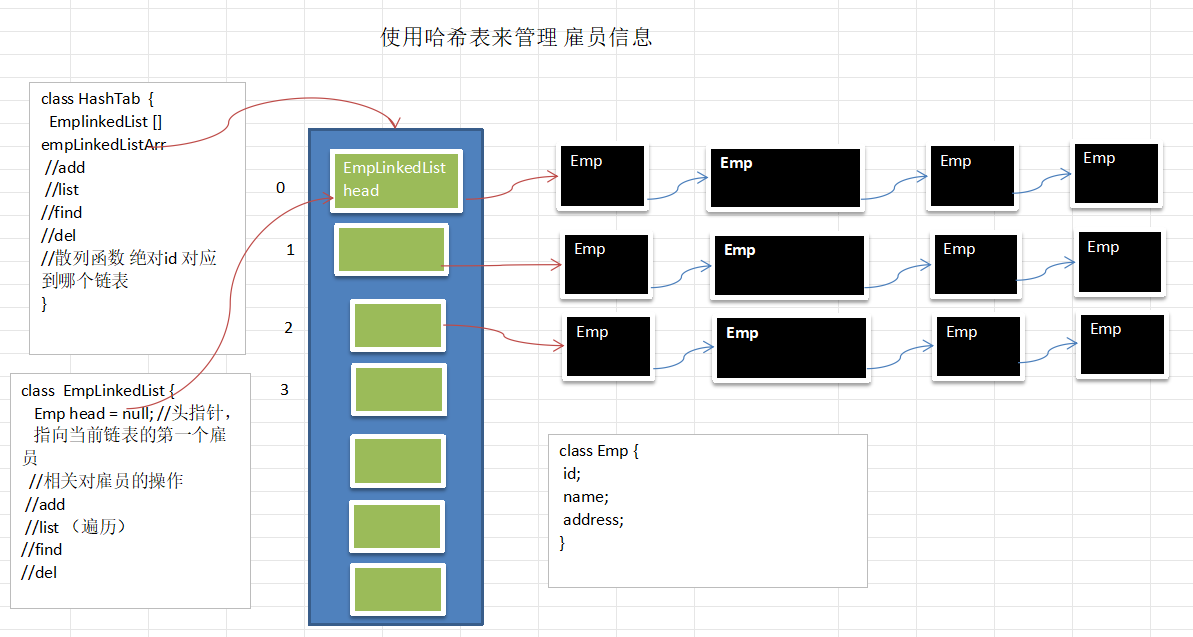
思路分析:
- 使用Emp类管理每个员工的信息。
- 使用EmpLinkedList表示一条链表。
- HashTable就是真正的哈希表,里面包含了增加、遍历、查找、删除操作。但是必须有散列函数,其作用是指示id对应的链表。
代码实现
HashTabDemo
1
2
3
4
5
6
7
8
9
10
11
12
13
14
15
16
17
18
19
20
21
22
23
24
25
26
27
28
29
30
31
32
33
34
35
36
37
38
39
40
41
42
43
44
45
46
47
48
49
50
51
52
53
54
55
56
57
58
59
60
61
62
63
64
65
66
67
68
69
70
71
72
73
74
75
76
77
78
79
80
81
82
83
84
85
86
87
88
89
90
91
92
93
94
95
96
97
98
99
100
101
102
103
104
105
106
107
108
109
110
111
112
113
114
115
116
117
118
119
120
121
122
123
124
125
126
127
128
129
130
131
132
133
134
135
136
137
138
139
140
141
142
143
144
145
146
147
148
149
150
151
152
153
154
155
156
157
158
159
160
161
162
163
164
165
166
167
168
169
170
171
172
173
174
175
176
177
178
179
180
181
182
183
184
185
186
187
| package com.yukinoshita.dataStructure.hashTab;
import java.util.Scanner;
public class HashTabDemo {
public static void main(String[] args) {
HashTab hashTab = new HashTab(3);
char operate = ' ';
Scanner scanner = new Scanner(System.in);
while (true) {
System.out.println("---------------------");
System.out.println("a:增加员工");
System.out.println("l:显示员工");
System.out.println("f:查找员工");
System.out.println("d:删除员工");
System.out.println("q:退出程序");
System.out.print("Enter operation: ");
operate = scanner.next().charAt(0);
System.out.println("---------------------");
switch (Character.toLowerCase(operate)) {
case 'a' -> {
System.out.print("输入id:");
int id = scanner.nextInt();
System.out.print("输入名字:");
String name = scanner.next();
hashTab.add(new Emp(id, name));
}
case 'l' -> {
hashTab.list();
}
case 'q' -> {
scanner.close();
System.exit(0);
}
case 'f'->{
System.out.print("请输入你要查找的员工id:");
int id = scanner.nextInt();
hashTab.findEmpById(id);
}
case 'd'->{
System.out.print("请输入你要删除的员工id:");
int id = scanner.nextInt();
hashTab.deleteByEmpId(id);
}
default -> System.out.println("Invalid operation");
}
}
}
}
class Emp {
public int id;
public String name;
public Emp next = null;
public Emp(int id, String name) {
this.id = id;
this.name = name;
}
}
class EmpLinkedList {
private Emp head = null;
public void add(Emp emp) {
if (head == null) {
head = emp;
} else {
Emp temp = head;
while (temp.next != null) {
temp = temp.next;
}
temp.next = emp;
}
}
public void list(int no) {
Emp p = head;
if (head == null) {
System.out.println("List:" + no + " is empty");
} else {
do {
System.out.print("=> id:" + p.id + " name:" + p.name);
p = p.next;
} while (p != null);
System.out.println();
}
}
public Emp findEmpById(int id) {
if (head == null) {
System.out.println("链表为空");
return null;
} else {
Emp p = head;
do {
if (p.id == id) {
return p;
}
p = p.next;
} while (p != null);
return null;
}
}
public void deleteByEmpId(int id) {
if(head == null){
System.out.println("无法删除,未找到该员工");
}else{
Emp p = head;
Emp prev = head;
do{
if(p.id == id){
prev.next = p.next;
System.out.printf("员工%d:%s已成功删除\n",p.id,p.name);
return;
}
prev = p;
p=p.next;
}while(p != null);
System.out.println("无法删除,未找到该员工");
}
}
}
class HashTab {
private EmpLinkedList[] empLinkedListArray = null;
private int size;
public HashTab(int size) {
this.size = size;
empLinkedListArray = new EmpLinkedList[size];
for (int i = 0; i < size; i++) {
empLinkedListArray[i] = new EmpLinkedList();
}
}
public void add(Emp emp) {
int empLinkedListNo = hashFun(emp.id);
empLinkedListArray[empLinkedListNo].add(emp);
}
public void list() {
for (int i = 0; i < size; i++) {
empLinkedListArray[i].list(i);
}
}
public void findEmpById(int id) {
int empLinkedListNo = hashFun(id);
Emp emp = null;
emp = empLinkedListArray[empLinkedListNo].findEmpById(id);
if (emp != null) {
System.out.println("在第"+empLinkedListNo+"条链表中找到员工:"+"id:" + emp.id + " name:" + emp.name);
}else{
System.out.println("没有找到该员工");
}
}
public void deleteByEmpId(int id){
int empLinkedListNo = hashFun(id);
empLinkedListArray[empLinkedListNo].deleteByEmpId(id);
}
public int hashFun(int id) {
return id % size;
}
}
|